
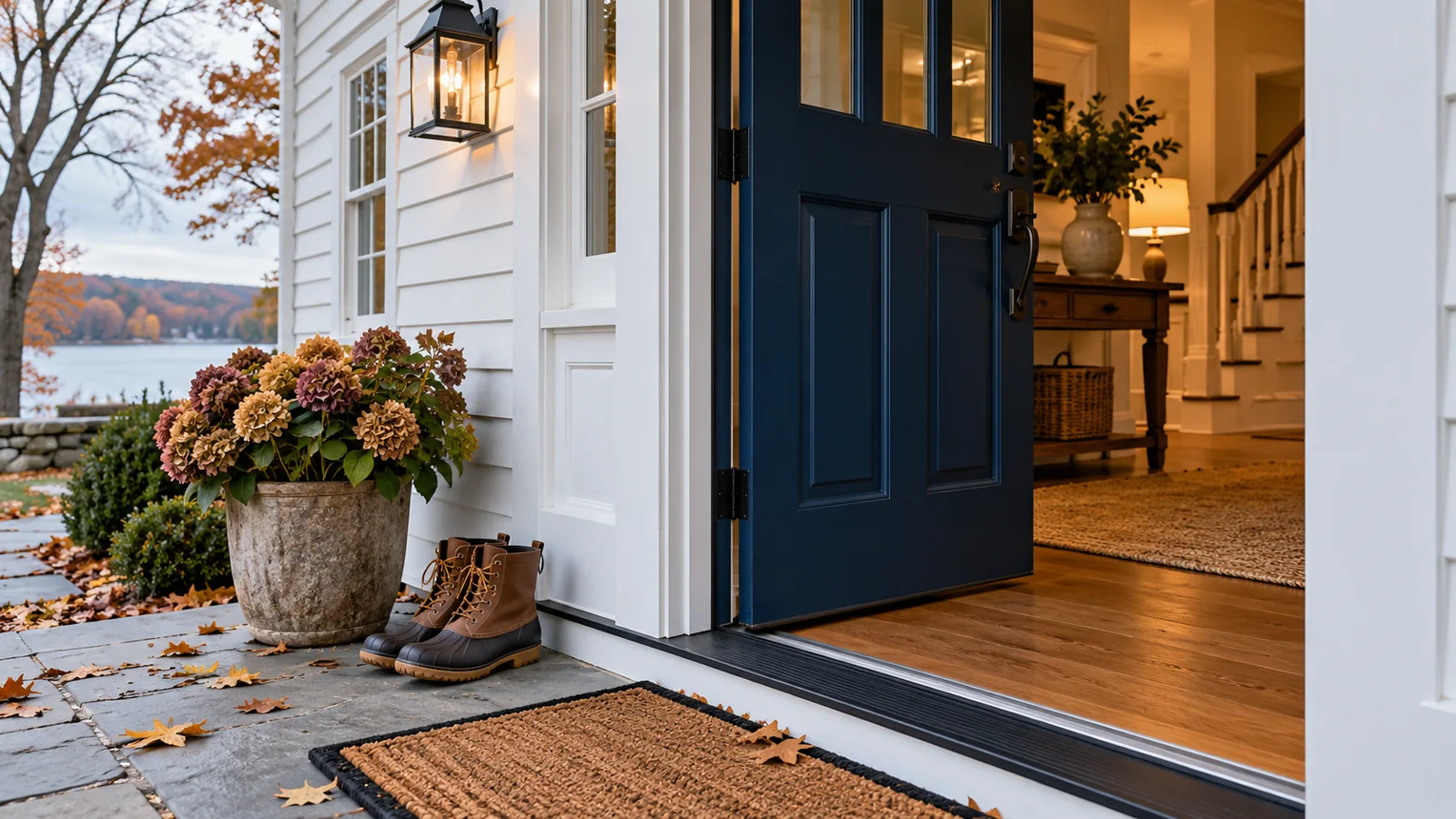
A cold spot beside the front door does not automatically mean the entire door needs replacing. It does mean the opening deserves a closer look. The useful first step is to separate a worn seal from a door that no longer closes properly, damaged materials or a larger installation problem.
For a Western Massachusetts homeowner heading into winter, a clear description of the symptoms can help an exterior remodeling conversation stay focused. Start with observation, not a shopping cart full of sealing products.
Describe when and where the problem appears
Does air seem to enter along the latch side, at the bottom or near the trim? Is the door difficult to latch? Do you see daylight at a closed edge? Is there staining after rain, a soft area near the sill or damage to surrounding finishes?
Take photographs and note whether the problem changes with wind or rain. Avoid dismantling the assembly or covering visible damage before it can be assessed. A draft and a water-entry problem may be related, but they are not the same diagnosis.
When weatherstripping belongs in the conversation
Government weatherization guidance distinguishes weatherstripping for moving components, such as doors, from caulking stationary gaps. If the door and frame are in suitable condition and the closure works correctly, a worn or missing seal may be a focused repair opportunity.
Product choice still matters. Ask whether the proposed seal fits the door and allows it to close and latch normally. A bulky strip that makes the door difficult to operate is not a successful outcome simply because it fills a visible space.
Look at the threshold and the whole opening
The bottom edge deserves its own assessment. Ask the contractor to evaluate the door bottom, threshold and adjacent materials together rather than assuming every cold spot can be addressed by adding a sweep.
Water staining, deterioration, a distorted frame or persistent operating problems call for investigation beyond replacing a seal. The relevant question is what caused the condition and what work addresses it. Covering a damaged area with a new finish can make the doorway look better without answering that question.
When replacement may make more sense
Replacement becomes a broader discussion when the door or surrounding assembly has significant problems, repair options do not meet your needs, or you want to change how the entrance functions. That decision should follow an assessment, not a blanket rule that every older door is inefficient.
If replacement is proposed, ask what is included: the door slab alone or a larger assembly, hardware, exterior and interior trim, finish work, and treatment of surrounding conditions. Compare like-for-like scopes. A product price is not the same thing as the complete installed project.
Make the entrance work for daily life
Think about carrying groceries, handling a stroller, receiving packages or helping a visitor through the entrance. Review the door swing, hardware operation, visibility and the transition to the interior floor. If you have accessibility priorities, state them before product selection.
For a home with an older exterior, bring photographs showing the whole facade as well as the doorway. Frame dimensions, trim proportions and finish choices can affect how a replacement belongs with the house. Keep the discussion practical: an entrance should operate well as well as photograph well.
Questions for an exterior-work estimate
- What appears to cause the draft, and what remains uncertain?
- Is the door closing and latching correctly?
- Are there signs of water damage or deterioration?
- What repair option is reasonable before considering replacement?
- What surrounding finish work is included?
- How would newly discovered damage be documented and approved?
Drafty door FAQs
Should I caulk around the moving edge of the door?
No. Weatherstripping and stationary-gap sealing serve different purposes. Use an appropriate repair method that preserves normal operation, and follow the relevant product instructions.
Does a replacement guarantee a specific energy saving?
No. Results depend on the existing condition, selected assembly, installation and the rest of the home. Do not make a decision around an unsupported savings promise.
Can sealing work affect ventilation?
Air sealing belongs in the context of the whole house. Weatherization guidance includes ventilation considerations; ask the qualified project team about relevant conditions rather than blocking intentional ventilation openings.
Need help deciding what your entrance needs? Explore JLans exterior remodeling and share photos and priorities for your exterior project.